
Start with food for stronger bones
Nordic Pace is a UK information site about calcium, vitamin D and the everyday habits that help adults look after their bones. Most people do not need a complicated programme. They need to know roughly how much calcium they are getting, whether their vitamin D is covered through the darker months, and which small routines are worth keeping.
Each guide stands alone, so start wherever your question is. If you have a couple of minutes rather than a spare afternoon, the calcium and vitamin D pages are the ones we would point you to first.
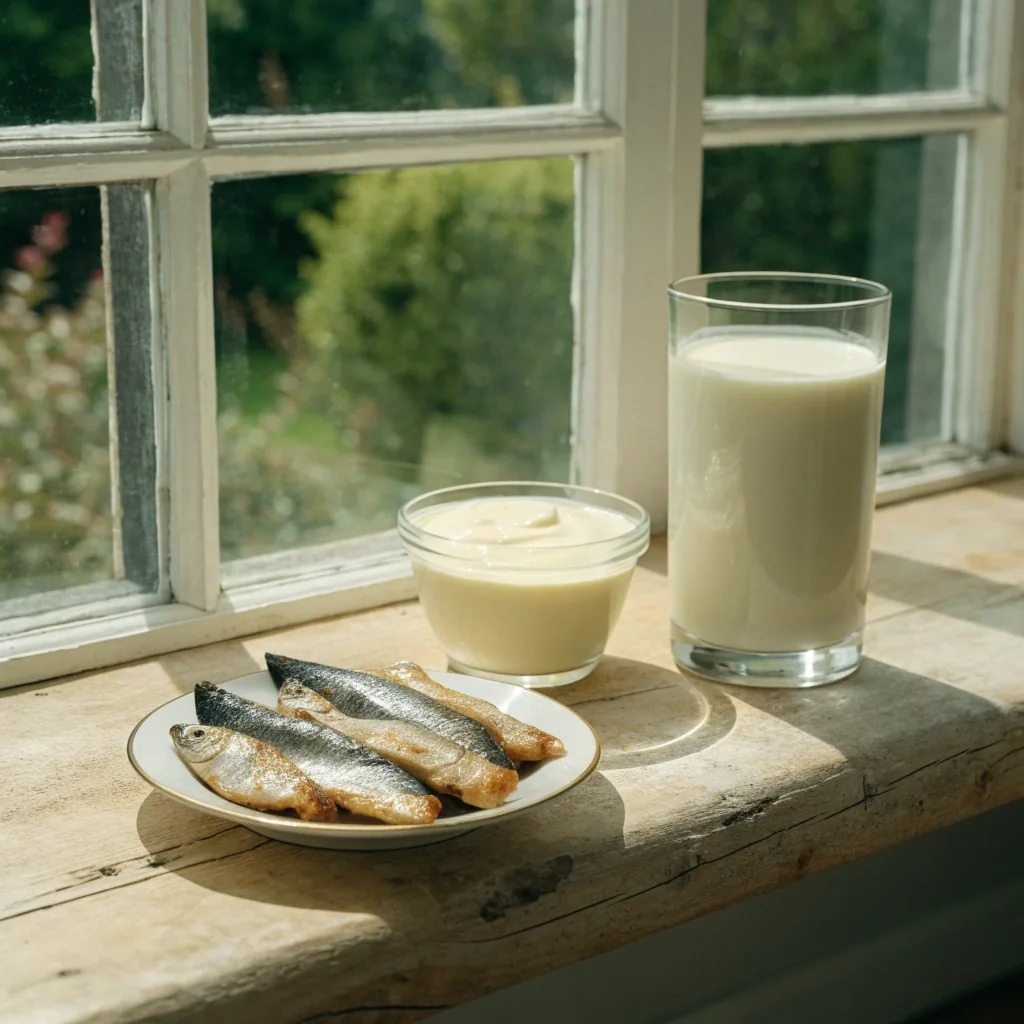
Public guidance in the UK is consistent: most adults need 700mg of calcium a day, and vitamin D helps the body absorb and use it. Those two facts shaped how this site is built.
How the two nutrients work together
What "food first" actually means here
We look at what is on your plate before we talk about capsules or tablets. Food-first is not an argument against supplements. It is an order of operations.

Vitamin D
Egg yolks appear on the NHS vitamin D food list. So do oily fish and most fa spreads, which are fortified. That list is short, which is exactly why vitamin D gets its own guide here.
Calcium: the amount most UK adults are working with
NHS Highland states that most adults need 700mg of calcium a day and that calcium gives bones their strength and hardness. NHS 111 Wales repeats the same figure for most healthy adults, and NHS Inform gives 700mg for adults over 50. That number is reachable through food: a modest serving of milk on cereal, a yoghurt, some cheese in a sandwich and a portion of greens can get you close. Our food sources guide breaks those foods down by portion rather than by lecture.
Read the calcium and vitamin D guideUK daily calcium reference for adults
700mg
The same figure appears across UK bone-health material, including for adults over 50.
UK daily vitamin D amount for adults
10µg
NHS Somerset and NHS 111 Wales note this may be advised all year for some groups.
Vitamin D: why it gets its own guide
Vitamin D does not build bone on its own, but it helps regulate calcium and phosphate. Sunlight matters too, and short daily exposure without sunscreen is named as a source in UK guidance, but it is unreliable from roughly October to March at UK latitudes. That seasonal gap is why autumn and winter supplementation is so widely discussed, and why we give vitamin D its own dedicated page rather than a paragraph. Calcium and vitamin D work as a pair here, and neither one carries the whole job.
How the two nutrients work togetherFood that quietly covers both nutrients
The NHS vitamin D food list is short and practical: oily fish such as salmon, sardines, herring and mackerel; egg yolks; and most fa spreads, which are fortified. Liver appears on that list as well, though it is not for everyone. Calcium sources overlap with the dairy aisle but are not limited to it. Fortified plant drinks, tinned fish with soft bones, and leafy greens all contribute. Our food sources guide keeps the examples to things you would actually buy in a UK supermarket, and it names the portions rather than the theory.
See which foods cover your intake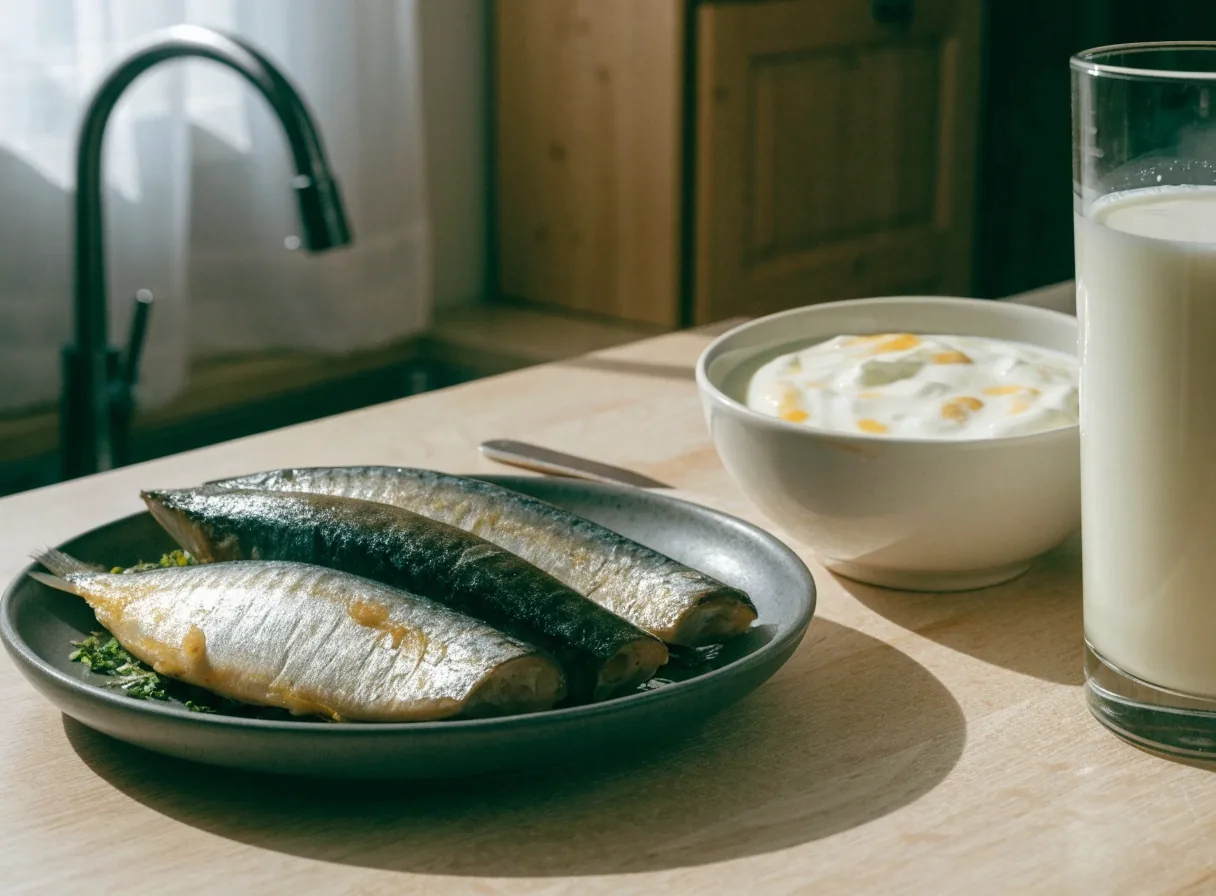

The two numbers that run the whole site
Everything here comes back to the same two UK reference figures. Read them once and the rest of the guides are easier to judge, including any label you pick up in a supermarket or a supplement aisle.
700mg
Calcium a day for most healthy UK adults, and the same figure for adults over 50.
10µg
Vitamin D a day for adults, with autumn and winter named as the gap in UK sunlight.
Neither figure is a target to beat. They describe what food usually covers and where a supplement may quietly fill a gap instead of adding anything on top of an already sufficient intake.
Read the calcium and vitamin D guideSunlight counts, until it does not
Short daily exposure without sunscreen is named in UK guidance as a vitamin D source. At UK latitudes it is unreliable from roughly October to March, which is the honest reason so much autumn and winter supplement conversation exists.
Movement is part of the picture
Bone responds to load and muscle strength supports balance as you get older. A daily walk is enough to count. Nothing here needs a gym membership, a tracker, or a twelve-week plan.
Protein gets overlooked
Conversations about bones fill up with calcium and leave protein out. A protein source at each main meal is the simple version, and it fits around work and family life without a separate plan.
Sunlight, movement and protein
Three habits come up repeatedly in regional NHS bone-health leaflets, and none of them require a strict plan. Here is what each one actually asks of you and where the everyday version of it lives.
Habit
Everyday version
Sensible sun exposure
A couple of minutes outdoors in the middle of the day, short of burning. Named as a vitamin D source in UK guidance, unreliable at UK latitudes from October to March.
Staying active
A daily walk, stairs instead of the lift, carrying the shopping. Bone responds to load and muscle strength supports balance with age.
Protein at main meals
Eggs at breakfast, fish or beans at lunch, a dairy or plant protein at dinner. Often overlooked while calcium takes the whole conversation.
What changes after 50
Bone density tends to decline with age, and NHS guidance reflects that by giving adults over 50 a specific calcium reference. NHS Inform uses 700mg for that group, and the same target appears across UK bone-health material for older adults. Age also changes how reliably you make vitamin D from sunlight and how much you move. That does not mean you need a shelf of products. It means the basics deserve more attention than they did at 25, and a conversation with a GP or pharmacist is worth having if you take prescription medicines.
Find your guide by age or routine
Readers arrive here from very different places. Some are in their thirties and curious. Some are shopping for a parent in their seventies. Some follow a plant-based diet and want to know whether fortified foods are enough.
Where most readers start
Under 50 with a mixed diet: start with the calcium and vitamin D guide. Shopping for someone older or less mobile: begin with daily habits, then the supplement page. Restricted diet: the food sources guide has the most relevant substitutions.

Fortified foods do count
Most fa spreads are fortified with vitamin D, and many plant drinks carry added calcium. If you follow a plant-based diet, these are the products doing quiet work.
See which foods cover your intake
When a supplement is commonly advised
There is one clear UK case: 10 micrograms of vitamin D daily, especially in autumn and winter. For calcium, supplementation is usually a clinical decision rather than a general one, because food covers the target for most people and high intakes are not something to self-prescribe.
Compare supplement formatsWhat a capsule can and cannot do
A supplement can fill a gap. Vitamin D supplements are the clearest example in UK guidance, because sunlight is unavailable for part of the year and few foods contain meaningful amounts. A calcium supplement may be advised in specific circumstances after a clinical conversation. What a supplement does not do is replace a varied diet, rebuild bone on its own, or act as a treatment. Anyone describing a joint or bone product as a cure is going beyond what the evidence supports, and we do not write that way here.
We also do not run testimonials, star ratings or before-and-after stories, and we do not claim that any product restores joints or produces rapid change. Those claims are common in this corner of the internet and they are not something we can stand behind.
Before you buy anything
Read the label for the amount per serving, not just the ingredient list. Check whether the product is described as a food supplement, which is how these products are regulated in the UK. Compare the daily vitamin D figure against the 10 microgram UK reference before you decide the dose is right for you.
If you take prescription medicines, particularly for heart, kidney or bone conditions, check with a pharmacist first. Some interactions are well documented and a two-minute conversation is cheaper than a wasted purchase.
Compare supplement formatsThe questions we hear most often
How much calcium do UK adults need each day?
UK public-health guidance puts the figure at 700mg a day for most healthy adults, and NHS Inform gives 700mg for adults over 50. Food usually covers it, which is why our food sources guide starts with portions rather than pills.
How much vitamin D should I take in autumn and winter?
UK guidance sets the adult daily amount at 10 micrograms, and public-health sources note this may be advised all year for some groups. The vitamin D page explains which groups that covers.
Do I need a supplement if I eat a balanced diet?
Vitamin D is the one most UK adults are advised to consider, particularly through the darker months. Calcium is usually a food question unless a clinician has told you otherwise.
Which foods are the best sources of vitamin D?
The NHS list includes oily fish such as salmon, sardines, herring and mackerel, egg yolks, and most fa spreads, which are fortified.
What changes after 50 or 65?
The calcium reference stays at 700mg, but how reliably you make vitamin D and how much you move both tend to change. That makes the basics more important, not more complicated.
How does sunlight help with vitamin D?
Short daily exposure without sunscreen is named as a vitamin D source in UK guidance. At UK latitudes it is unreliable in winter, which is why supplementation is discussed.
Who writes the guides
The editorial team works from UK public-health material, including NHS Inform, NHS Somerset, NHS 111 Wales and regional NHS bone-health leaflets. We name the figures those sources use, such as 700mg of calcium for most adults and 10 micrograms of vitamin D daily.
Where sources disagree or where guidance is conditional, we say so rather than smoothing it over. The About page explains how we choose material and how to flag something that looks wrong. If that sounds slow, it is meant to be. Bone health is a decades-long project, not a fortnight.
Nordic Pace Bone Health · 48 Fenchurch Street, London EC3M 3LY, United Kingdom · +44 20 7972 4449 · [email protected] · Monday to Friday, 9:00 AM – 6:00 PM
How this site is organised
- How the nutrients work together Bone Health Basics
- The UK numbers in detail Calcium & Vitamin D Guide
- Shopping and cooking Food Sources for Strong Bones
- Sunlight, movement, protein Daily Habits & Lifestyle
- Formats and labels Choosing a Supplement
Start anywhere, then keep the two figures in mind
Five minutes is enough to get something useful out of this site. Read the calcium and vitamin D guide, then check your own kitchen against the food sources page. If you are considering a supplement, the label matters more than the packaging.
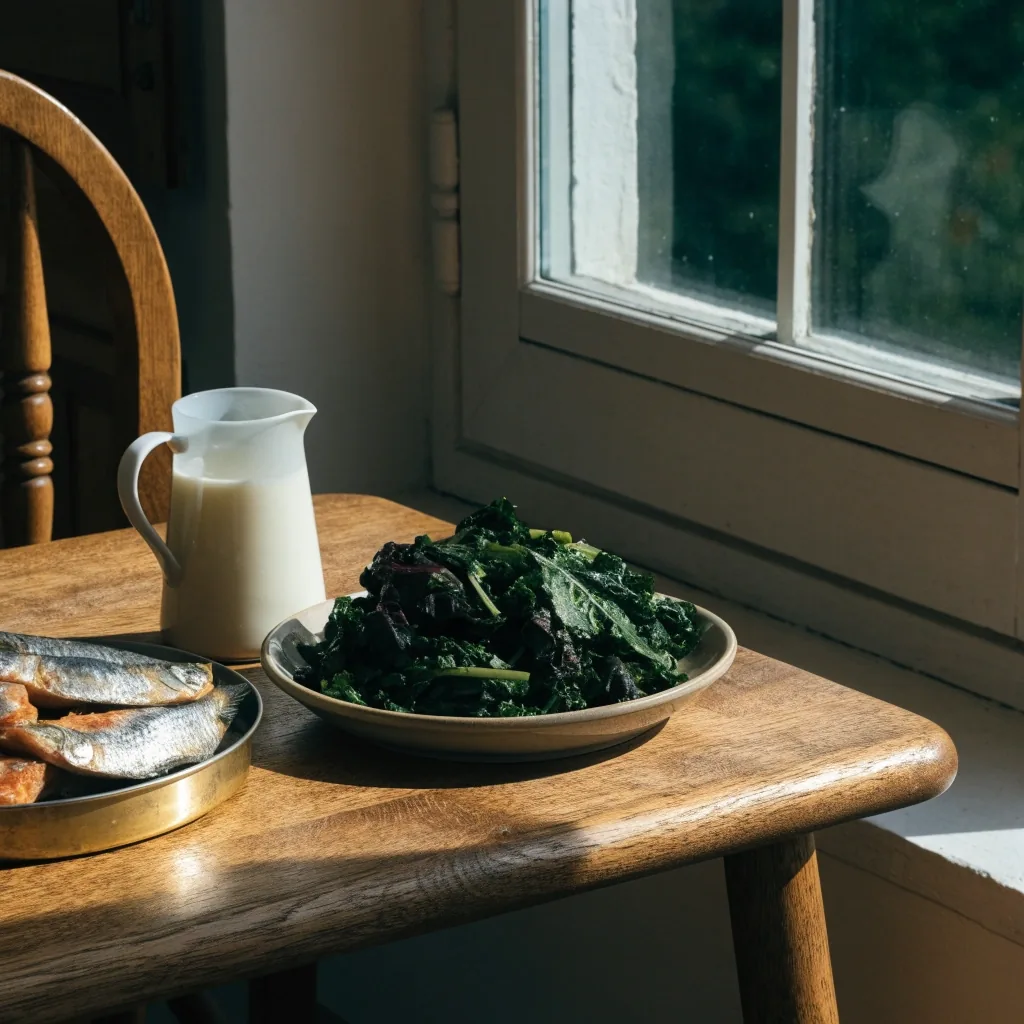
Milk, greens, fortified spreads, oily fish and eggs. Nothing on this site asks you to buy something before you have checked what is already in the kitchen.