
Twenty kilometers on Nordic poles demands strict energy budgeting. Without a plan, most walkers burn out their triceps and hip flexors by kilometer fourteen. A distance of this length takes between three and four hours depending on underfoot conditions, elevation gain, and pack weight. You are moving roughly 26,000 to 30,000 steps while repeatedly loading your upper body with pole strikes. That volume builds muscular fatigue that feels very different from standard trail hiking or road running.
Pacing is not just about foot speed. It controls heart rate, maintains effective pole plant angles, and protects the rotator cuff muscles as miles accumulate. Treat this distance as three distinct operational blocks: a restrained opening segment, a steady mechanical middle phase, and a technique-focused final push. If you set your pace correctly early, your final five kilometers will match your split times from the first five.
Target speed ranges for mixed terrain paths
Lock your target speed to trail surface instead of chasing a single average pace. Hard packed gravel permits long strides and clean backward pole swings, whereas mud or loose granite chips force shorter reach and faster turnover. Expect your speed to fluctuate across mixed terrain by as much as 1.8 kilometers per hour without your actual physical effort changing.
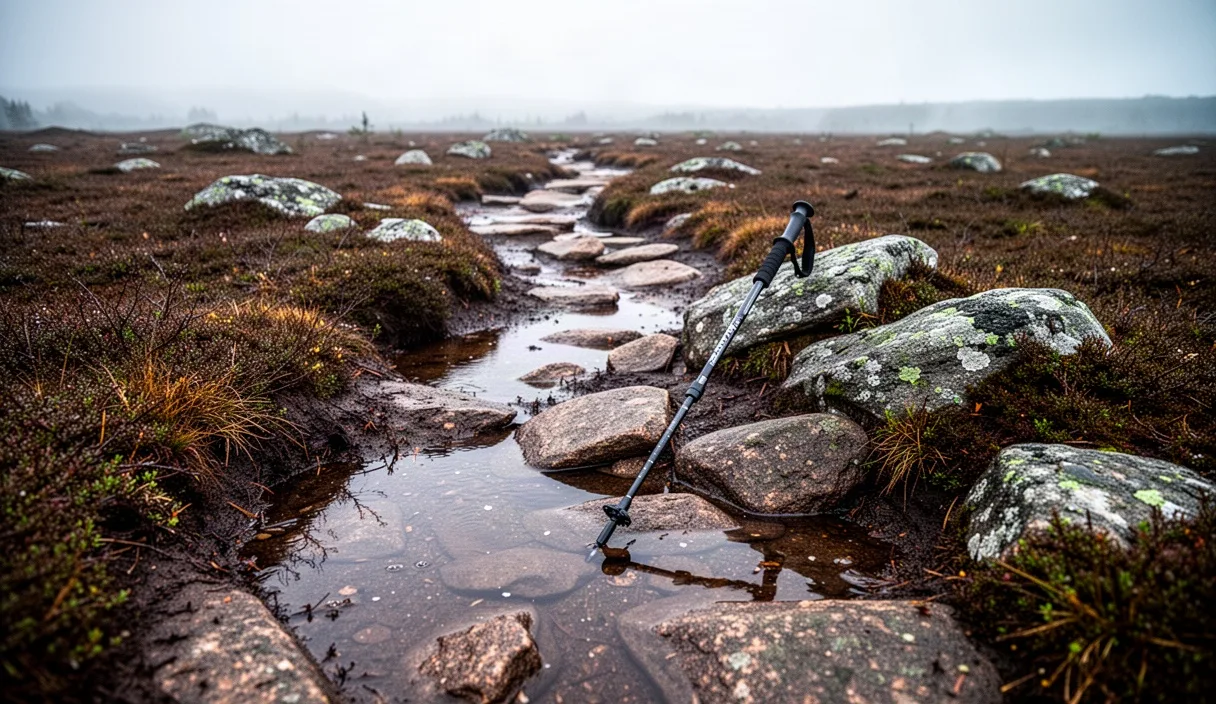
Monitor your pace per kilometer using GPS, but cross-reference it against your breathing rhythm. On flat dirt paths, aim for 5.8 to 6.4 kilometers per hour. This speed lets the pole tips grip firmly and permits a full backward push through the wrist strap. If the track shifts to roots, rocks, or loose river stone, drop your target to 4.7 to 5.2 kilometers per hour. Forcing high speeds on technical terrain shortens the push-off phase and turns your poles into balancing crutches instead of propulsion tools.
| Terrain Type | Speed Range (km/h) | Cadence (Strides/min) | Pole Action Priority |
|---|---|---|---|
| Compacted gravel / hard earth | 5.8 - 6.4 | 110 - 118 | Full arm extension past hip, open hand release |
| Asphalt / firm pavement | 6.0 - 6.6 | 114 - 122 | Angled rubber paw grip, controlled rebound |
| Loose gravel / wet mud | 4.6 - 5.2 | 104 - 110 | Slightly wider plant base, carbide tip bite |
| Rolling incline (4% to 7% grade) | 4.8 - 5.4 | 118 - 126 | Shortened swing, steeper plant angle, double push |
| Moderate decline (4% to 8% grade) | 5.4 - 6.0 | 100 - 108 | Poles angled backward, soft knees, no overstriding |
Adjust your pace immediately when climbing. Reduce stride length by roughly 25 centimeters on hills exceeding a 5 percent grade. Keep your pole plant angle behind the pelvis line to maintain upward drive. Attempting to hold flat-trail speed on an ascent will drive your heart rate above lactate threshold, draining leg power that you cannot recover over the remaining distance.
First hour discipline: avoiding early sprint spikes
Start slower than you think you need to. Fresh legs, cool morning air, and the snap of fresh pole plants tempt almost every walker into setting off at 6.8 or 7.0 kilometers per hour. That initial surge burns valuable muscle glycogen instead of mobilizing fat stores. By kilometer four, that surplus speed leaves lactic acid in the forearms and calves, degrading your arm swing before the halfway mark.
Use the first 60 minutes to calibrate your movement pattern. Establish a synchronized cadence where every foot strike corresponds cleanly to an opposing pole plant. Keep your mouth closed for nasal breathing on flats during the first 30 minutes. If you find yourself gasping through your mouth on level ground, you are moving at least 0.5 kilometers per hour too fast. Pull back the stride length and let your arm swing relax.
Follow this checklist throughout the opening hour:
- Check strap tension at minute ten. Hands swell slightly as blood circulates, which can cause straps to pinch the ulnar nerve.
- Ensure your pole tip lands level with or slightly behind the heel of your leading foot, never out in front of the toes.
- Keep your grip loose on the forward swing. White knuckles during the first five kilometers produce forearm cramps by kilometer fifteen.
- Check your heart rate if using a monitor. Cap effort at 68% to 73% of maximum heart rate for the first eight kilometers.
Treat kilometer one as a pure mobility warm-up. Walk at 5.0 kilometers per hour for the first 800 meters without forcing aggressive pole plants. Let the shoulder joints lubricate and allow the hamstring tendons to warm to the stride range. Add full pole propulsion only after ten minutes of steady, fluid movement.
Standing rest stops vs sitting halts
Do not sit down during a 20-kilometer trek unless you have sustained an injury. Sitting down drops your heart rate rapidly, causes peripheral blood pooling in the quadriceps, and allows the lower back muscles to tighten within three minutes. When you stand up after sitting, your hip flexors feel stiff and your first 400 meters of stride mechanics will be ragged and inefficient.
Use standing rest pauses lasting between 60 and 90 seconds. Plant both poles firmly in front of you at shoulder width, lean your chest forward slightly onto the wrist straps to unload the lumbar spine, and take six slow, deep diaphragmatic breaths. This position decompresses the lower back, keeps the leg pumps active, and prevents the circulatory drop that leads to post-rest dizziness.
| Factor | Standing Rest (60-90 seconds) | Sitting Halt (5-10 minutes) |
|---|---|---|
| Muscle elasticity | Preserved; fascia remains warm | Lost; hamstrings and calves stiffen |
| Blood pressure shift | Minimal; steady venous return | Sudden drop; risk of lightheadedness upon standing |
| Restart friction | Zero; immediate return to pace | High; requires 3 to 5 minutes to restore rhythm |
| Core temperature | Stable on cold or windy trails | Rapid cooling; sweat chills the lower back |
Reserve deliberate halts for logistical necessities: refilling water bottles, applying blister patches, or clearing trail grit from footwear. If you must stop to tape a hotspot, do it immediately. A two-minute standing fix at kilometer six avoids a degraded, limping gait over the final eight kilometers. Prop your foot on a log, boulder, or bench rather than sitting on the ground.
Fluid and carbohydrate consumption timetable
Dehydration degrades your walking cadence long before you feel thirsty. Over a 20-kilometer trek, sweat losses range between 1.2 and 2.4 liters depending on ambient humidity and temperature. A drop of just two percent in body mass through water loss cuts aerobic output and slows nervous reaction time, increasing the risk of tripping over trail obstacles. Fuel intake must run on a mechanical clock, not your appetite.
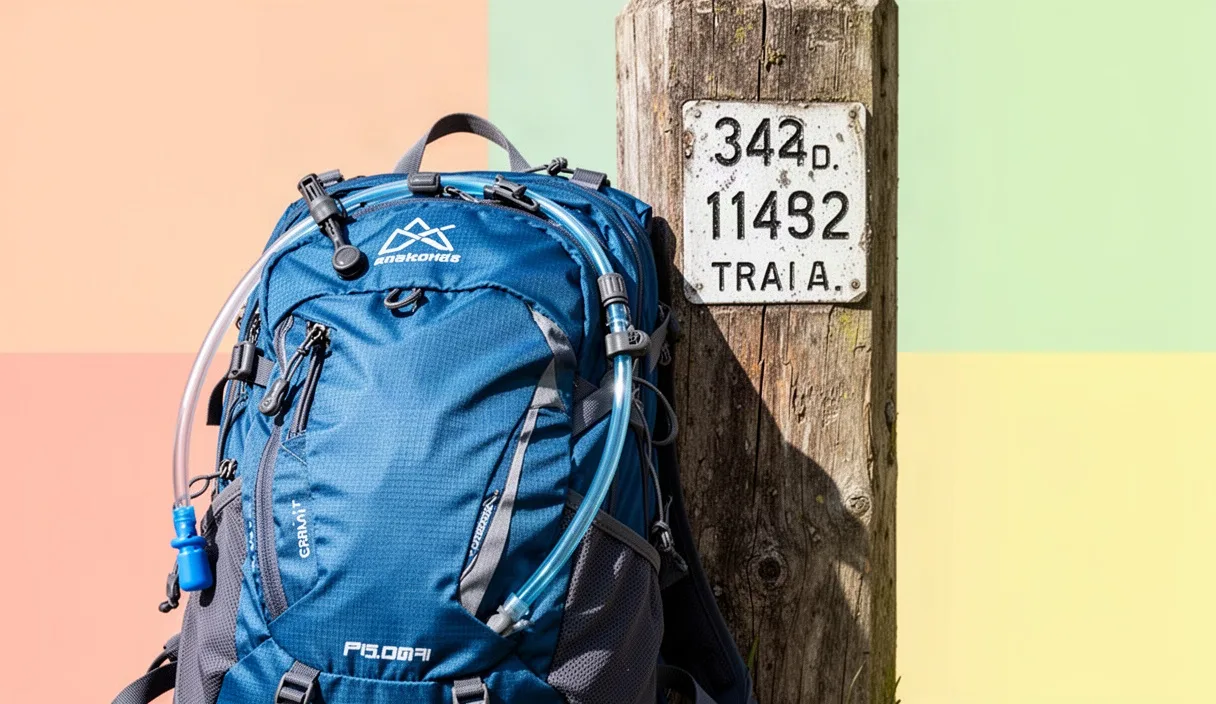
Start fueling at minute 35. After that, take carbohydrates every 25 to 30 minutes in doses of 25 to 35 grams. Liquid or semi-liquid fuels work best because the steady arm swing of Nordic walking makes chewing dense solids awkward and disrupts your breathing cycle. Keep chewables or gels in accessible shoulder-strap pockets rather than burying them inside a zippered backpack compartment.
- Pre-start (15 minutes prior): Drink 250 milliliters of plain water or mild electrolyte solution. Do not consume simple sugars right before walking to prevent reactive hypoglycemia.
- Kilometer 4 (approx. 40 minutes): Take your first carbohydrate gel (approx. 25 grams of carbs) with 150 milliliters of water. Verify that your pole straps release cleanly if you need to use your hands.
- Kilometer 8 (approx. 1 hour 20 minutes): Consume 30 grams of carbohydrates via chews or an isotonic beverage. Take 150 to 200 milliliters of fluid containing sodium to support muscle firing.
- Kilometer 12 (approx. 2 hours): Eat a small, solid snack such as a date bar or salted rice cake (approx. 30 grams of carbs). The salt curbs palate fatigue from sweet gels. Drink 200 milliliters of fluid.
- Kilometer 16 (approx. 2 hours 40 minutes): Take your final carbohydrate gel or liquid fuel packet (20 to 25 grams of carbs) with 150 milliliters of water. This fuel will carry your nervous system across the finish line.
Drink in small, deliberate sips rather than gulping entire flasks at once. Gulping fills the stomach with air and fluid slosh, which creates diaphragm cramps when the torso rotates during the Nordic swing. If trail temperatures rise above 22 degrees Celsius, increase your hourly fluid target by 150 milliliters and ensure electrolyte intake reaches roughly 350 to 500 milligrams of sodium per hour. Individuals with kidney conditions, heart concerns, or metabolic disorders should seek guidance from a physician to establish fluid and mineral limits suited to their needs.
Late-route posture check for tired shoulders
Fatigue strikes the shoulder girdle and upper back around kilometer 15. As the latissimus dorsi and triceps exhaust their glycogen, walkers instinctively hunch their shoulders toward their ears, bend forward at the waist, and shorten their arm swing. This structural collapse reduces the efficiency of the poles by more than 40 percent and converts them into dragging sticks that trip the heels.
Run a posture audit every two kilometers throughout the final quarter of the route. Start at the top of your head and work down through the torso. Deliberately drop your shoulders away from your ears. Open the chest by pulling the shoulder blades flat against the rib cage, not by arching the lower spine. Reset your gaze forward: look 15 to 20 meters ahead along the path instead of staring straight down at your boots.
Restore the wrist strap push if you find yourself clutching the pole grips. Check that your fingers open at the end of the backward stroke, allowing the strap to take the pressure while your hand relaxes momentarily behind your hip. If your forearm flexors are burning, you are holding the rubber handles too tightly. Let the pole swing forward naturally between your thumb and index finger, then guide it down into the terrain at a 60-degree angle.
Watch for pelvic tilt in the final four kilometers. As the glutes tire, the pelvis often tilts forward, arching the lower spine and loading the lumbar joints. Tighten your lower abdominal wall slightly to tuck the pelvis back into a neutral alignment. This simple core adjustment restores stride length, takes pressure off the hip flexors, and keeps your foot plants clean and quiet.
Common mistakes
- Dragging the pole tips: Letting the rubber paws or carbide tips trail behind without planting them firmly. This burns shoulder energy without giving you forward drive.
- Grip freeze: Squeezing the pole handle continuously across the entire stride. Open the fingers at the back of every push to allow blood circulation into the hand.
- Overstriding on descents: Reaching too far forward with the lead foot to gain speed downhill. This sends high braking forces into your knees and stresses the heel bones.
- Burying nutrition in the pack: Storing water and fuel inside zippered compartments that require taking off your pack. You will skip crucial intake cycles to avoid the hassle.
- Ignoring hot spots: Waiting until an irritating rub becomes a full blister. Friction must be addressed the minute it appears.
Practical next steps
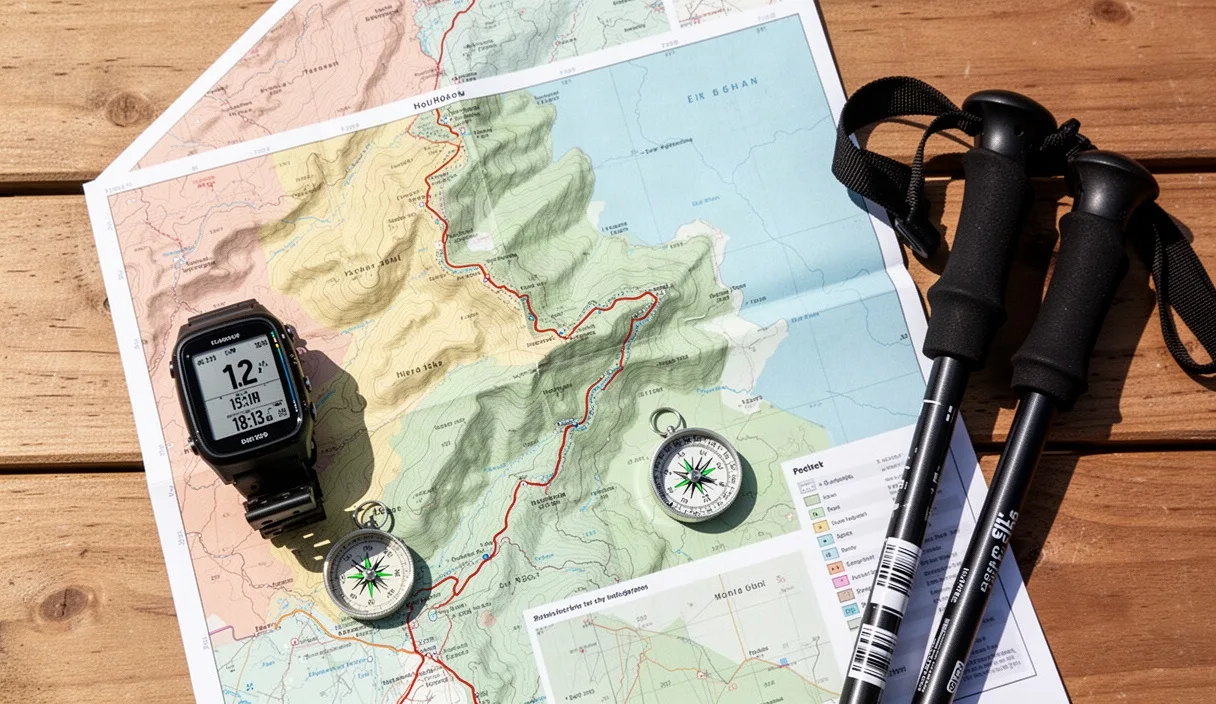
Prepare your gear and route 24 hours before your target start time. Map your 20-kilometer course to identify surface changes, water refill points, and steep elevation shifts so you know where your target speeds must change. Weigh your loaded pack; keep base gear, fluid, and fuel under 4.5 kilograms to prevent unnecessary downward pressure on your knees and hips.
Inspect your pole tips and straps tonight. Replace worn rubber pads if your route covers asphalt sections, or clean the carbide tips for dirt and gravel trails. Set your watch or phone with 25-minute alerts to prompt your hydration and carbohydrate intake automatically. If you have underlying joint or cardiovascular concerns, talk to a qualified physical therapist or sports physician before attempting distances of 20 kilometers or greater. Once on the trail, execute the opening hour with patience, maintain your posture checks, and let the poles do their job.