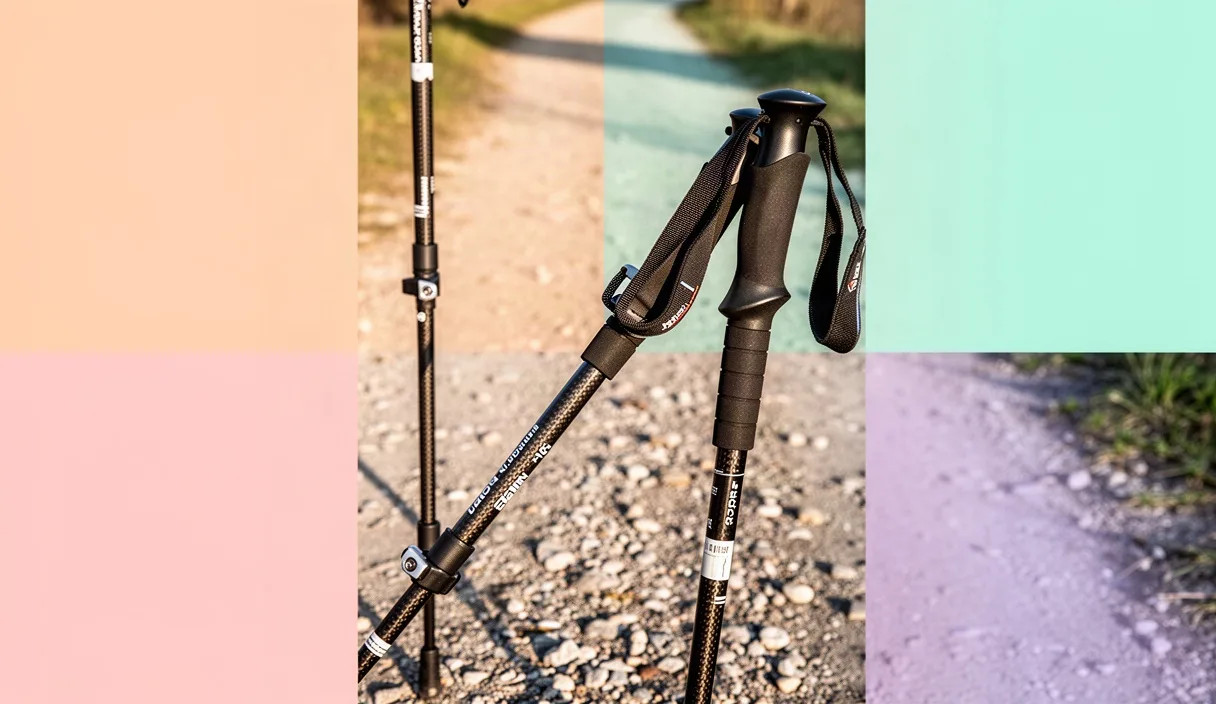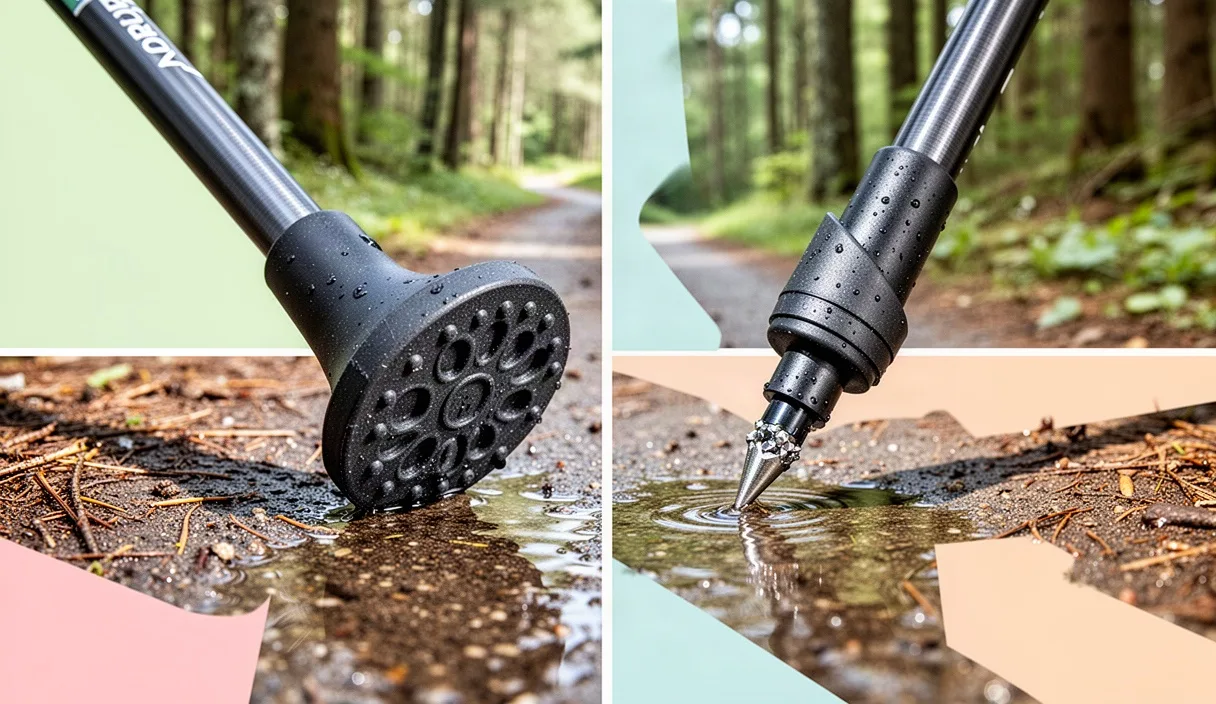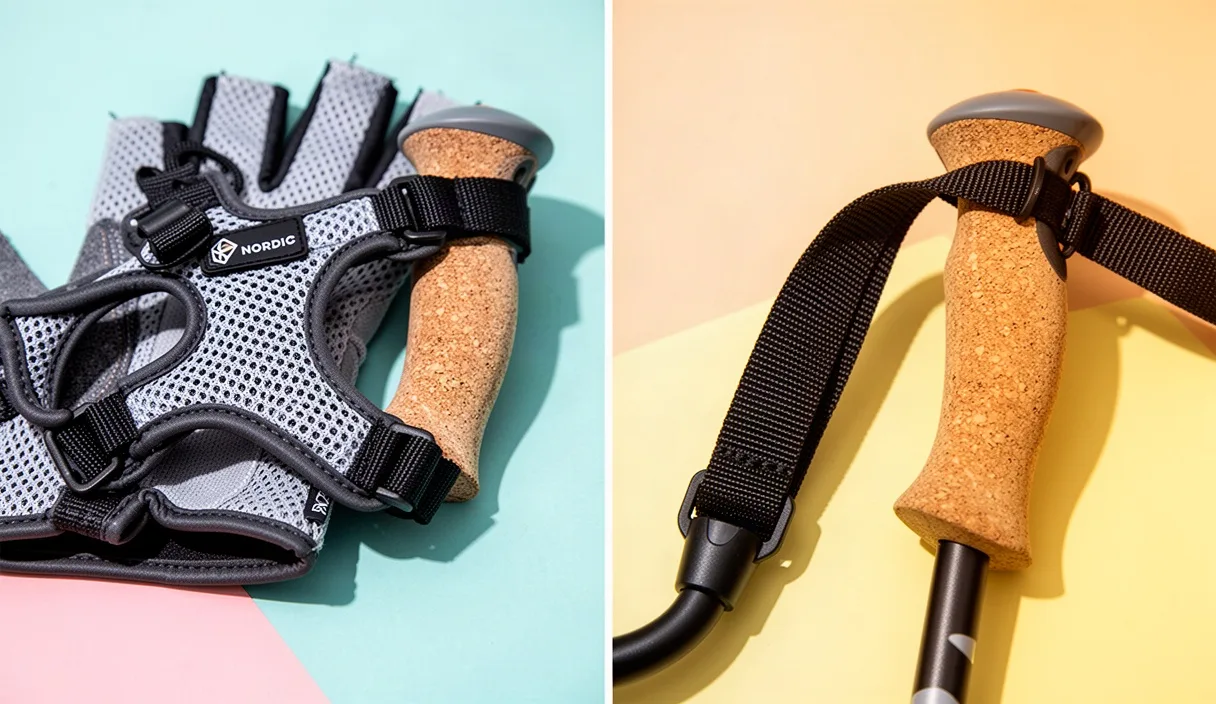
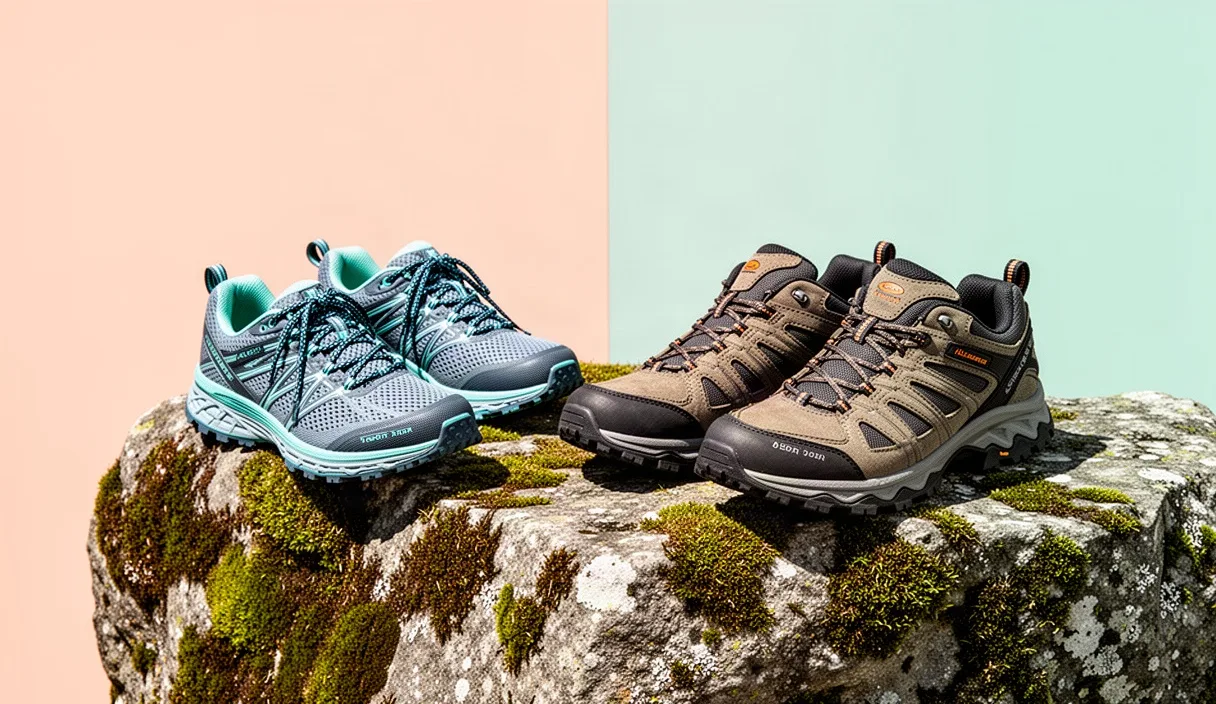

Footwear dictates your pole cadence. Match your shoe to the movement pattern of Nordic walking or risk shin splints, blisters, and wasted upper-body propulsion. Pole walkers land hard on the heel, roll through the midfoot along the lateral column, and push off with active metatarsal extension. Traditional hiking boots freeze that motion. Low-cut hiking shoes and trail running shoes both offer ankle freedom, but their underfoot mechanics operate on conflicting design philosophies.
Trail runners prioritize flex, ground feel, and minimal weight to maximize turnover. Low-cut hiking shoes prioritize torsional rigidity, abrasion defense, and platform stability under pack weight. When your hands hold poles, you generate horizontal drive alongside vertical clearance. The wrong chassis fights that horizontal force. Here is how trail runners and low-cut hiking shoes compare across flex, stack geometry, grip profiles, and structural lifespan.
The biomechanics of foot roll in Nordic walking
Nordic walking alters standard gait. The forward pole plant extends stride length by 5 to 12 centimeters compared to passive walking. This exaggerated stride angle forces an aggressive heel strike at an entry angle of 25 to 35 degrees. The foot must then articulate through a continuous, linear roll: heel strike, lateral border ground contact, transverse arch loading, and forceful push-off through the first and second metatarsal heads.
A rigid chassis arrests this progression. If the shoe sole resists longitudinal bending, the foot slaps the ground, shifting shock into the anterior tibialis muscle and patellar tendon. The poles transfer 4 to 8 kilograms of force through the arms on each plant, which unloads joint mass but demands precise directional tracking from the lower body. If the shoe shifts laterally on the foot bed during weight transfer, pole planting precision decays within 30 minutes of continuous movement.
Trail runners accommodate this roll through uninhibited longitudinal flexion. The foot moves naturally through the push-off phase, allowing the gastrocnemius and soleus to fire alongside the triceps pushing on the pole straps. Low-cut hiking shoes dampen this roll due to full-length protection shanks. They force the ankle joint to compensate for what the sole cannot articulate, leading to premature fatigue on flat trails and moderate rollers.
Midsole flexibility requirements
Check shoe flex before buying. Hold the heel collar in one hand and the toe cap in the other. Bend the shoe. It must hinge cleanly at the metatarsophalangeal joint, directly under the ball of the foot. It must not fold in the dead center of the arch. It must not remain board-stiff.
Low-cut hiking shoes use molded nylon or thermoplastic polyurethane (TPU) shanks positioned between the midsole and the outsole. In shoes like the Salomon X Ultra 4 Low or the Oboz Sawtooth X Low, this plate protects the plantar fascia against bruising on sharp rock edges. However, the plate frequently limits metatarsal extension to under 30 degrees. Normal Nordic push-off asks for 45 to 55 degrees of extension. Fighting an internal plastic shank on every single stride burns metabolic energy and can inflame the plantar fascia.
Trail runners switch to split forefoot rock plates or eliminate rock plates entirely. A shoe like the Altra Lone Peak 8 or the Brooks Cascadia 17 uses segmented rock protection or soft ethylene-vinyl acetate (EVA) and supercritical foams. These compounds absorb localized impacts without halting sagittal plane bending. The foot rolls, compresses, and snaps off the trail cleanly.
| Metric | Trail Running Shoes | Low-Cut Hiking Shoes |
|---|---|---|
| Average Weight (Pair, Men US 9) | 540g to 650g | 820g to 980g |
| Shank Construction | Segmented TPU or None | Full-Length Nylon / Molded TPU |
| Torsional Rigidity | Moderate to Low | High |
| Forefoot Flexibility | High (45 to 60 deg bend) | Low to Moderate (20 to 35 deg bend) |
| Primary Midsole Foam | Supercritical EVA / TPU Blends | Dense Compressed EVA / Polyurethane (PU) |
Heavy walkers carrying loads over 10 kilograms benefit from the stiffer polyurethane midsoles common in hiking shoes. The dense compound resists compression set under load. For standard Nordic walking with a light daypack under 4 kilograms, the lighter trail runner foam keeps swing weight down, saving approximately 1.8 kilograms of lifted mass per foot across a standard 10-kilometer session.
Heel-to-toe drop numbers: zero drop vs 8mm
Heel-to-toe drop measures the elevation difference between the heel cushion and the forefoot cushion. The drop number fundamentally alters your foot strike, Achilles tendon load, and the stride length you can achieve with poles.
Zero-drop shoes place the heel and forefoot on the identical plane off the ground (for example, 25mm heel and 25mm forefoot in zero-drop models). Shoes with an 8mm to 10mm drop elevate the heel substantially (for example, 32mm heel and 24mm forefoot). Neither design is universally superior. Your personal ankle mobility, calf tendon adaptation, and stride length govern which geometry functions on trail.
- Zero-Drop Dynamics (0mm): Encourages a midfoot landing if striding passively, but pole walking mechanics force a heel-first impact. A zero-drop platform at heel strike demands maximum dorsiflexion from the ankle. This stretches the Achilles tendon and calf complex under load. If you lack 15 degrees of active ankle dorsiflexion, zero drop will overload your lower calves. However, zero-drop shoes maximize ground feedback and prevent heel catch on uneven root surfaces.
- Moderate-Drop Dynamics (4mm to 6mm): Offers a functional middle ground for pole training. Footwear like the Hoka Speedgoat or Saucony Peregrine cushions the initial calcaneus impact without pitching your weight forward prematurely. Stride roll remains predictable.
- High-Drop Dynamics (8mm to 11mm): Found in shoes like the Brooks Cascadia, Salomon Speedcross, and most low-cut hiking shoes like the Merrell Moab Speed. The raised heel wedge initiates early ground contact. It reduces strain on the Achilles tendon and calf muscles, which benefits walkers with chronic heel pain, tight calves, or structural Achilles sensitivity. The downside: the tall heel acts as a lever arm, increasing the risk of an ankle roll if you clip a trail obstacle.
Evaluate your Achilles tendon flexibility before picking a drop profile. If you switch from an 8mm low-cut hiker to a zero-drop trail shoe overnight, limit your pole outings to 20-minute sessions during the first three weeks to allow tendon remodeling. Consult a physiotherapist if you have a history of calcaneal spurs or chronic plantar fasciosis before dropping below a 4mm heel-to-toe offset.
Outsole lug patterns for dirt and mud traction
Nordic poles provide two extra points of contact, but forward push-off comes entirely from the feet. If your trailing foot slips 2 centimeters at the end of each stride, you bleed speed, lose rhythm, and compromise balance. Matching outsole lug shape and rubber composition to your primary terrain is non-negotiable.
Lug depth and mud clearance
Trail runners offer specialized traction variants. Mud-specific trail shoes use aggressive chevron-shaped lugs measuring 5mm to 6.5mm deep, spaced wide apart. The wide channels shed clay and wet loam on every flex of the foot. Hard-packed dirt trail runners use flatter, multi-directional lugs measuring 3mm to 4mm, grouped tightly to maximize surface contact area.
Low-cut hiking shoes typically use perimeter perimeter braking lugs with perimeter-depth profiles between 4mm and 5mm. They favor hard rubber compounds engineered for longevity over soft, high-friction compounds. The lug spacing on hiking shoes is often tight, which causes wet dirt and gravel to pack into the negative spaces. Once packed, the outsole becomes a slick, flat surface, leaving your poles to hold stability on steep descents.
Rubber compound hardness
Rubber hardness is measured using the Shore A durometer scale. Outsole selection is a trade-off between grip and wear resistance:
- Soft compounds (55 to 65 Shore A): Found on trail runners featuring Vibram Megagrip, Continental, or proprietary tacky rubbers. They grip wet granite, exposed roots, and wooden bridges securely. They wear down rapidly if used on asphalt connections between trail heads.
- Hard compounds (70 to 80 Shore A): Standard on low-cut hiking shoes. Built to resist grinding against abrasive sandstone and shale. They slip easily on wet river rock and damp tree roots, forcing you to anchor harder on your pole spikes.
If your routes cover mixed terrain with wet soil, organic forest mulch, and root steps, choose trail runners with 4.5mm to 5mm directional lugs. If you walk crushed limestone paths, dry gravel rail-trails, or fire roads, low-cut hiking shoes with 3.5mm low-profile lugs provide adequate grip with less tread squirm.
Durability comparisons over 500 kilometers
The lifespan of your shoe determines your cost per kilometer. Lightweight materials save energy on the trail, but they fail faster under friction and continuous environmental exposure.
A standard 500-kilometer cycle exposes footwear to roughly 650,000 foot strikes. The differences between low-cut hikers and trail runners show up in three critical wear zones: the upper fabric, the midsole foam structure, and the outsole lug edges.
| Component | Trail Runners at 500 km | Low-Cut Hiking Shoes at 500 km |
|---|---|---|
| Upper Construction | Engineered mesh may fray at flex zones; toe cap glue can split. | Nubuck, split suede, or heavy ripstop nylon remains intact. |
| Midsole Cushioning | EVA foam shows deep compression wrinkles; loses 20 to 30% rebound. | Dense EVA or PU remains structurally supportive; minimal collapse. |
| Outsole Lugs | Sharp trailing edges round off; soft rubber lugs wear down 1.5mm to 2mm. | Hard rubber preserves lug profile; edge rounding is minimal. |
| Heel Counter / Collar | Internal heel fabric can wear thin from rapid ankle cycling. | Thick collar padding resists tear; structural counter stays stiff. |
Trail runners show visible performance degradation between 450 and 700 kilometers. The lightweight EVA or TPU foam loses its elastic return, meaning your joints take more vibration on hard ground. The flexible upper meshes can tear if dragged against scree or sharp brambles, particularly at the widest point of the forefoot flex point.
Low-cut hiking shoes hit their structural midpoint at 500 kilometers. High-density polyurethane midsoles resist flattening, often maintaining their shock-absorption integrity beyond 1,000 kilometers. Nubuck leather or heavy-weave synthetic uppers shrug off rock abrasion that shreds trail running mesh. However, you pay for that lifespan on every stride: carrying an extra 200 grams on each foot over a 15-kilometer route equals lifting roughly 3,000 kilograms of unnecessary cumulative weight.
Common mistakes
Small errors in shoe selection and setup ruin technique. Avoid these field mistakes:
- Buying waterproof (Gore-Tex) low-cut shoes for hot weather: A waterproof membrane in a low-cut collar does not stop water from splashing in over the ankle. Once flooded, a membrane holds water inside the shoe, macerating your feet over long distances. Waterproof liners also raise internal shoe heat, causing heavy sweating and blister formation. Pick unlined, highly breathable mesh models unless walking through freezing snow or cold, wet grass.
- Sizing for everyday walking: Nordic walking drives the foot forward inside the shoe during the push-off and downhill braking phases. Buying your street shoe size jams your toes against the front bumper, causing bruised or lost toenails. Always buy a half to full size larger than your casual footwear, leaving 12 to 15 millimeters of space between your longest toe and the end of the shoe box.
- Ignoring midfoot lock: A flexible shoe is useless if your heel lifts out of the cup during push-off. Use the extra eyelet at the top of the shoe collar to tie a heel lock (runner's loop). This stabilizes the calcaneus without requiring you to over-tighten the laces across your instep.
- Using worn-out road running shoes: Smooth road outsoles have shallow 1mm to 2mm tread patterns and soft sidewalls. They lack torsional support on uneven dirt and will cause lateral slipping during vigorous pole thrusts.
Action plan for selecting your footwear
Test shoes systematically before heading out on multi-hour routes. Follow these field preparation steps:
- Measure foot volume and width: Stand bare-foot on a piece of paper in the late afternoon when your feet have swollen slightly. Trace your foot outlines. Measure the widest part across the ball of the foot. Wide forefeet require anatomical toe-box brands like Altra or wide-fit variants from Brooks and Merrell.
- Match terrain to shoe category: Choose trail runners if your paths are 70% soft dirt, technical singletrack, or if you prefer fast pacing above 6.5 km/h. Choose low-cut hiking shoes if your terrain is loose rock, jagged scree, thorny underbrush, or if you consistently walk with a loaded pack.
- Perform the shop floor mobility test: Lace the shoes using a runner's loop. Take deep, exaggerated walking strides while simulating the pole push-off motion. If the shoe sole feels like a flat board that slaps the floor, reject it. Look for continuous, unhindered forefoot flexion.
- Break-in testing: Complete two short 3-kilometer loops on familiar ground before embarking on high-mileage routes. Check for hotspots at the back of the heel and the medial side of the big toe joint. If hotspots appear, alter your lacing tension immediately before blisters form.