
Forearm pump ruins pole plant mechanics. When the deep flexors of the hand seize during long Nordic walking outings, pole angle decays, backward thrust drops, and trail pace slows. Wrist pain and forearm tightness are rarely caused by weak arms. They stem from continuous isometric squeezing, poor strap utilization, and mismatched grip circumferences that force the wrist flexors to work without rest.
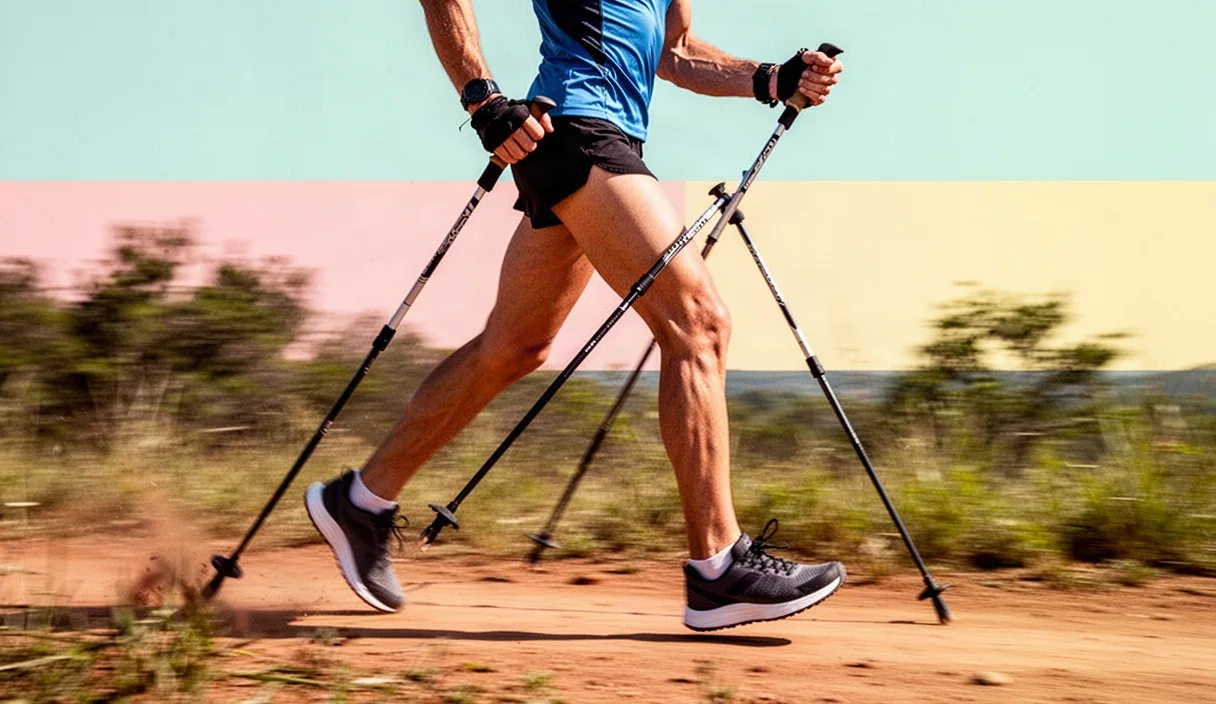
Nordic walking relies on a cyclic grip-and-release pattern. You grip the handle as the pole strikes the ground in front, push backward through the strap, open the fingers behind the hip to extend the push, and catch the grip as the arm swings forward. When fatigue sets in, walkers skip the release. They maintain continuous hand tension over thousands of steps, triggering acute forearm splints and extensor tendon irritation. Correcting this requires adjustments to grip technique, diameter sizing, and mid-walk stretching.
The white-knuckle grip mistake on flat terrain
Flat ground encourages mindless pacing. Without variable terrain demanding technical hand placement, walkers default to an unbroken clamp on the pole handle. This constant grasp keeps the flexor digitorum profundus and flexor carpi radialis under uninterrupted isometric tension. A standard pole strap is designed to transfer 70 to 80 percent of the propulsion force directly through the wrist and carpal tunnel, bypassing the fingers entirely. Clamping the handle with full hand force wastes metabolic energy and restricts capillary blood flow through the forearm compartment.
The correct mechanic requires active finger relaxation at the mid-stance of every stride. As the pole tip plants level with the back of your lead heel, your fingers wrap gently around the grip with only 1.5 to 2.0 kilograms of pressure. As your body rolls over the pole and the hand passes behind your hip, the fingers must splay open completely. The propulsion force is applied solely through the pad of the palm against the strap webbing. If you can read the brand logo inside your open palm at the end of the backward stroke, your release is correct.
To break a white-knuckle habit on level asphalt or crushed gravel, run alternating-interval hand checks across your route:
- Count 30 strides per hand: Walk for 30 left-foot strikes while consciously pointing your fingers straight toward the trail behind you during the backswing.
- Thumb-index ring contact: Keep only the thumb and index finger touching the front of the handle during the forward carry, leaving the bottom three fingers open.
- Acoustic pacing check: Listen to the pole tip strike. A rigid, over-gripped plant sounds sharp and clattery, whereas a strap-driven propulsion plant sounds dull and firm as the body weight drives through the pole shaft.
Walking with locked fingers for an hour on flat paths generates thousands of needless micro-contractions. Releasing the grip at the back of each stroke lowers forearm intramuscular pressure, allowing fresh arterial blood to flush out local lactate and metabolic waste before the next plant.
Tendon load: forearms during three-hour walks
Cadence in Nordic walking averages between 110 and 130 steps per minute. Over a three-hour trek across rolling terrain, each arm executes roughly 10,000 to 11,700 pole plants. If you hold just 3.0 kilograms of excess grip force per stroke, your forearm flexors accumulate over 30 metric tons of unnecessary load over the course of an afternoon. This sustained mechanical load falls heavily on the wrist extensors, which must fire simultaneously to stabilize the hand against the backward thrust.
The extensor carpi radialis brevis (ECRB) tendon bears the brunt of poor propulsion form. Located on the lateral side of the elbow and running into the wrist, the ECRB stabilizes the wrist joint in slight extension (15 to 20 degrees) during the push. When a walker grips the handle too tightly while flexing the wrist downward, this tendon rubs across the radial head. By hour two, this friction creates lateral epicondyle tenderness and dull ache radiating into the mid-forearm belly.
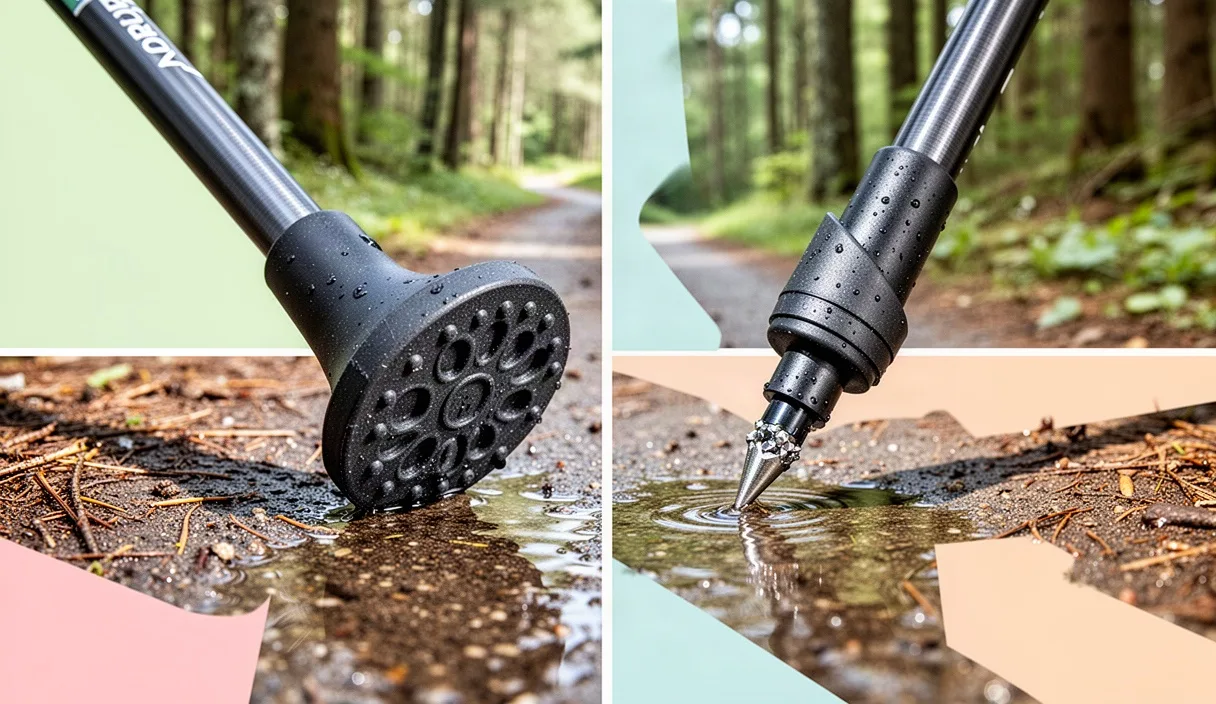
Repetitive shock transmission worsens tendon strain. Hard surfaces like dried clay or paved multi-use paths bounce vibration up through the pole shaft directly into the carpal bones. If your pole lacks active anti-shock mechanisms, or if you omit rubber paws on tarmac, your wrist tendons absorb peak deceleration spikes up to 1.8 times body weight on downhill transitions. If deep, sharp pain develops near the bony bumps of your elbow or wrist during continuous load, stop your session and consult a physical therapist or sports medicine physician to rule out chronic tendinopathy.
Three-minute trailside extensor stretch
Interrupt cumulative forearm strain before tendon micro-tears escalate into inflammatory cycles. Perform this three-minute sequence every 45 to 60 minutes during long walks, or immediately upon reaching the turnaround point of your route. Plant both pole tips firmly in the dirt at shoulder width to serve as balance supports.
Reverse palm prayer press
Position your forearms parallel to the trail ground at chest height. Press the backs of your hands together with your fingers pointed straight down toward the ground. Keep your shoulders down and slowly draw your wrists up toward your sternum until you feel a firm stretch across the dorsal surface of both forearms. Hold for 35 seconds without bouncing. Breathe out slowly to reduce involuntary muscle guarding in the neck and upper trapezius.
Overhand pole lever stretch
Take one pole in your right hand, gripping it at the balance point of the shaft. Extend the right arm straight out in front of you at shoulder height, palm facing down. Using your left hand, gently tilt the top grip of the pole downward while keeping your right elbow fully locked. This leverages the pole shaft to pull your wrist into deep passive flexion and mild ulnar deviation. Maintain the hold for 30 seconds, switch arms, and repeat for another 30 seconds on the left side.
Active finger extensor flick
Stand tall with both arms hanging down at your sides. Tightly curl your fingers into fists for two seconds, then forcefully flare all ten fingers wide apart as if throwing water off your fingertips. Complete 20 rapid repetitions over 25 seconds. This pump action activates the lymphatic drainage channels in the anterior forearm, clearing pooled fluid from the carpal tunnel and restoring extensor baseline length.
Grip diameter sizing: cork vs plastic handles
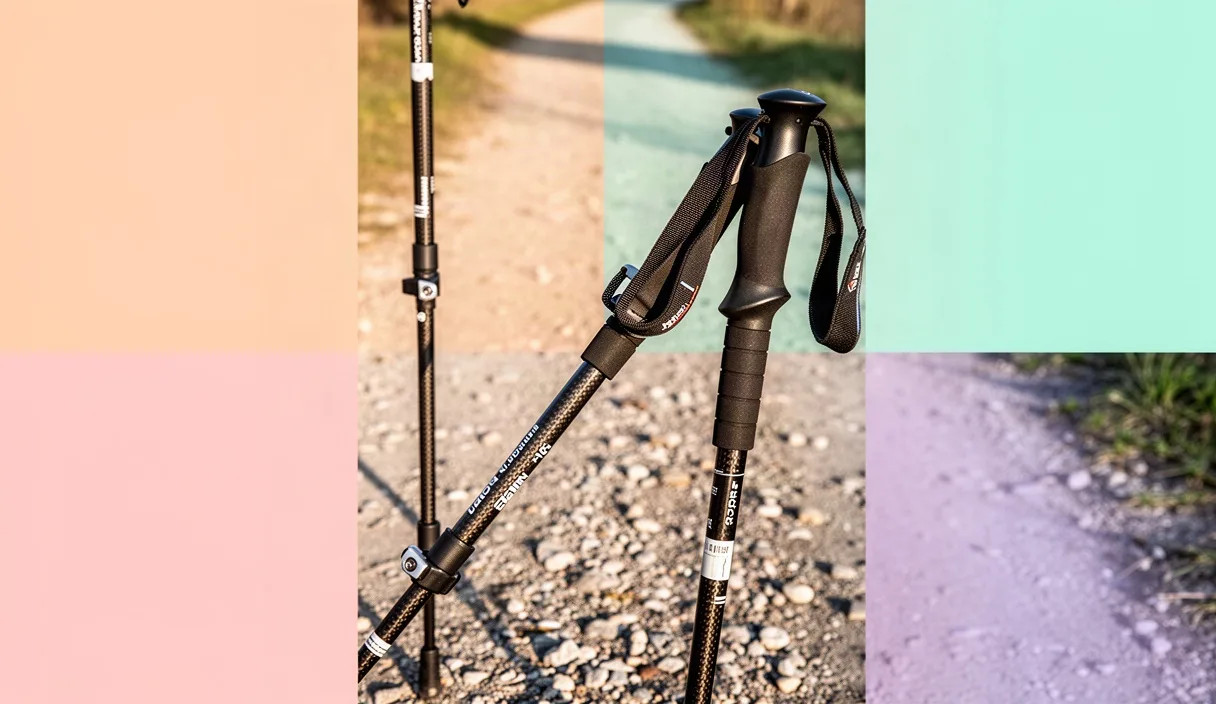
Handle diameter and casing material dictate muscle recruitment. A grip that is too narrow forces the flexor tendons into an extreme shortened range, increasing mechanical strain across the palm. A grip that is too thick demands maximum finger span, tiring the hand within the first five kilometers. Most manufacturers build grips with circumferences between 80 mm and 98 mm, but small hands or thick winter gloves alter effective contact dimensions significantly.
| Grip Feature | Natural Cork Handle | Molded Plastic / Rubber Handle |
|---|---|---|
| Sweat absorption | High; cell structure wicks moisture away | None; sweat pools on surface ribs |
| Friction coefficient (dry) | Moderate; smooth, requires fitted strap | High; aggressive texture grips skin |
| Friction coefficient (wet) | High; tackiness increases slightly | Low; becomes slick without textured gloves |
| Vibration damping | High; porous core absorbs high-frequency trail buzz | Low; transmits shock into wrist joints |
| Cold weather insulation | Warm to touch down to -15 degrees C | Conducts cold; hardens below zero degrees C |
| Durability life | Moderate; erodes after 800 to 1,200 km | High; lasts multiple seasons without wear |
Match your grip diameter to your hand measurements. Measure from the crease of your wrist to the tip of your middle finger. If that distance is under 170 mm, select a slim handle (circumference under 85 mm). If your measurement exceeds 190 mm, build out your pole handle using adhesive tennis overgrip tape to bring the circumference closer to 95 mm. Tape wrapping reduces required squeezing force by allowing the fingertips to rest naturally against the thumb base without pinching.
Material selection directly affects hand tension. Natural cork is superior for long-distance summer endurance. Because cork absorbs skin oils and perspiration, you do not have to tighten your grip when climbing in hot weather. Plastic and non-porous rubber handles turn slick within 40 minutes of intense sweating, causing an unconscious survival clench to keep the pole under control. If you use plastic handles, pair them with fingerless mesh Nordic walking gloves that feature silicone palms.
Post-walk ice and recovery protocols
Recovery starts within fifteen minutes of finishing a session. Tendon structures cool down slowly, and stagnant inflammation in the narrow carpal and cubital tunnels causes stiffness that can linger for 48 hours. Target the flexor origin at the medial elbow and the extensor muscle bellies along the top of the forearm immediately upon returning home.
Skip passive resting in favor of systematic tissue recovery:
- Cryo-massage with an ice cup: Freeze water in a 200 ml paper cup. Tear the rim to expose bare ice. Rub the ice block in circular motions directly over the lateral forearm muscles, moving from the mid-forearm up toward the elbow joint for six to eight minutes. Stop immediately if the skin turns numb or pale.
- Eccentric wrist lowering drills: Sit in a chair with your forearm resting flat on your thigh, wrist hanging over the knee, holding a 1.0 to 1.5 kilogram weight (or a full water bottle). Use your opposite hand to lift the weight up into extension, release the assist, and slowly lower the weight downward using only the tired arm over a strict four-second count. Do two sets of 12 repetitions per arm. Eccentric loading stimulates collagen cross-linking along the tendon axis.
- Contrast water immersion: Fill two basins, one with cold tap water (12 to 15 degrees C) and one with warm water (36 to 38 degrees C). Submerge both hands and forearms up to the elbows in the warm water for three minutes, then immediately plunge them into the cold water for one minute. Repeat this rotation three times, ending on cold. This contrast pumps blood through the deep muscle compartments without requiring active joint motion.
Common mistakes
Small errors in strap configuration and wrist positioning compound across thousands of strides. Watch for these mechanical faults:
- Setting straps too loose: If the strap wedge sits more than 10 mm away from the skin between your thumb and index finger, the pole slides back before loading. You will instinctively squeeze the plastic grip to stop the slippage. Tighten the strap until it anchors securely around the carpus.
- Wrist cocking on the backstroke: Bending the wrist backward like a server carrying a tray strains the flexor retinaculum. Maintain a neutral, straight line running from the elbow through the knuckles throughout the plant, thrust, and release.
- Ignoring frozen pole tips: Using worn carbide tips on rocky trails causes pole bounce. That instantaneous shock travels directly up the shaft into the extensor carpi radialis. Inspect your tips every 200 km and replace worn spikes promptly.
- Wearing tight watch bands: Chunky GPS watches or heart rate straps pulled too tight compress the cephalic vein and radial nerve against the radius bone, speeding up hand numbness and forearm cramping. Loosen the band by one notch during double-pole workouts.
Actionable recovery plan
Fixing forearm and wrist fatigue takes immediate equipment adjustment and disciplined trail form. Start your next workout with these precise corrections:
- Audit your strap fit today: Put on your Nordic walking straps indoors. Adjust the hook-and-loop closure so the anchor point rests flush against your wrist bone. Your open palm should push against the strap without the handle slipping down through your fingers.
- Mark a 50-stride reminder: Place a strip of bright electrical tape around the shaft of your poles just below the grip. Every time your eyes glance down and catch that color, execute three complete open-hand releases behind your hip to break isometric tension.
- Add daily eccentric work: Keep a light 1.0 kilogram hand weight next to your desk or living room chair. Perform two sets of 12 slow eccentric lowering repetitions each evening after your endurance walks.
- Monitor symptoms: If wrist tingling, night-time thumb numbness, or sharp elbow pain persists for more than 72 hours despite technique changes, pause pole training and schedule an evaluation with a certified physical therapist or medical specialist.